
Shelby Past Residents by Era
A backward address trail starts with the era that needs an answer. Cleveland WebGIS has current parcel information and Parcel History beginning in 2002. The Cleveland County Register of Deeds has a verified real-property index from January 3, 1995 forward, followed by a separately labeled, unverified 1945–1994 index. The library's Miller volumes, newspaper microfilm, census material, maps, and older county sources reach further back. Each source answers a narrower question, so previous residents should be recorded with a date, source, and role rather than treated as one continuous list.
| Source | Years it covers | Where held | What it shows |
|---|---|---|---|
| Verified deed/property index | January 3, 1995–present | Cleveland County Register of Deeds portal | Recorded party, instrument, date, book/page, and image route where available |
| Unverified deed index | January 1, 1945–December 31, 1994 | Register of Deeds Consolidated Index | Name/index lead that must be verified at the office |
| Parcel History | January 1, 2002–present | Cleveland WebGIS | Transfers, combines, owner, deed reference, and transaction date |
| Miller directories | 1937/38; 1943/44; 1945/46–1957/58; 1961/62; 1963/64 | North Carolina Room and DigitalNC | Historical household, occupation, and address clues |
| Sanborn maps and census | Maps 1885–1921 and 1926; census dates vary | Archive, Library of Congress, library, and repositories | Block context or a dated household, not current occupancy |
The chain changes channel as it grows older. Use the online route for a current deed or parcel reference. Use office books, image instructions, and the physical Register of Deeds when the online record is incomplete. Use the North Carolina Room for directories and microfilm. Use the State Archives catalog for older county series. Note: A record's date and custodian matter as much as the name it contains.
Start a Shelby Address Trail
Find the current parcel before trying to read an old street number backward. Cleveland WebGIS Parcel History accepts a PID, or parcel number, and leads to a property card, map, ledger sheet, and scanned-deed images where available. Its documented history fields include Parcel Number, Parent Number, Owner Name, Deed Reference, Transaction Type, and Transaction Date. A parcel can have transfers, combines, or splits, so the parent number is especially important when a newer PID seems to hide an older record.
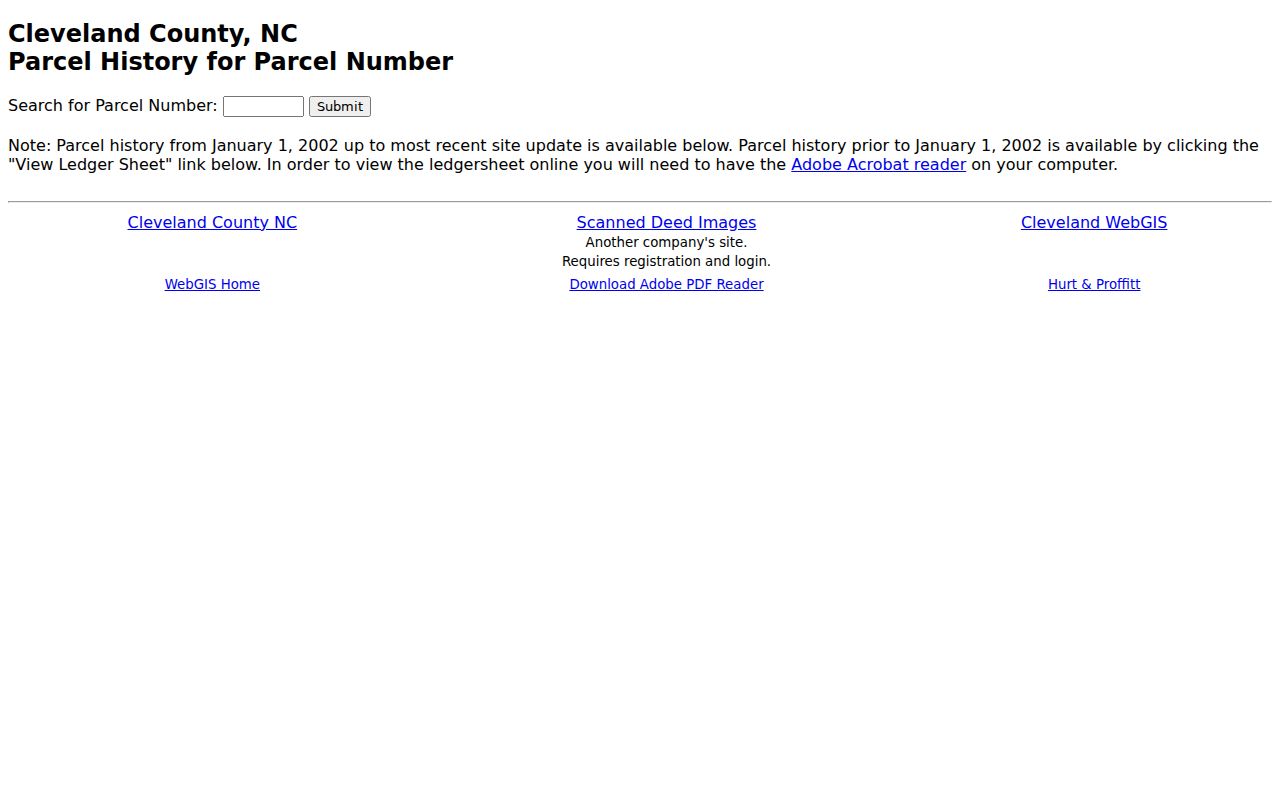
The PID and deed reference make a steadier bridge than a formatted street number. The county advises that a parcel's situs address is the physical location, while its tax mailing address is where notices go. Neither field proves that a particular person lived at the property.
Use the map and property-card route to note the present owner name, parcel number, deed reference, transaction date, parent number, and legal description clues. Parcel History begins in 2002; for older parcel history, use the linked ledger-sheet route and county office records. A property card reports parcel and title information, not a complete household roster.
Shelby Past Owners in Deed Chains
For a Shelby address, follow the title path backward from the deed reference. Search the current owner as grantee near the transaction date in the Register of Deeds index. Open or request the purchase instrument, identify its grantor or seller, and copy the legal description. Then search that seller as grantee for the earlier purchase. Keep the same lot, subdivision, PIN, parcel history, book/page, and legal description in view. A street number can change, while a lot or legal description can keep the chain together.
- Use WebGIS to capture the PID, current title name, deed reference, transaction date, and any parent parcel number.
- Search the current owner as grantee in the Cleveland County land-record index near that date.
- Read the purchase deed or request it, recording the seller, legal description, book/page, plat reference, and actual recording date.
- Search the seller as a grantee to locate the preceding acquisition, then test the lot, PIN, subdivision, and description against the same parcel.
- Repeat backward. If the chain enters an estate, consult the Clerk's special-proceeding or probate file; if it enters a corporation, check the North Carolina Secretary of State entity history.
- Grantor
- The person or entity transferring an interest in the recorded instrument, often the seller in a deed.
- Grantee
- The person or entity receiving the recorded interest, often the buyer. In a backward search, a former seller is searched as a prior grantee.
- Chain of title
- The sequence of recorded transfers for the same property. It identifies title history, not every occupant.
- Legal description
- The lot, block, plat, metes-and-bounds, or other formal property description that can survive a street-number change.
Shelby Address Records Before 1995
The online record changes character before 1995. The Register of Deeds describes the 1945–1994 Consolidated Index as unverified, and red results are a finding aid rather than verified title evidence. Between 1979 and 1985, the search is by party name and year rather than an exact date. Locate the instrument and read the date printed in it. Do not copy a red index result as a confirmed transfer, and do not assume a modern address search will find a deed described only by a lot, block, former road name, or metes and bounds.
For older deeds, use book indexes, the View Images route, microfilm, physical deed books, and the Register of Deeds office. Pre-1960 image instructions require book and page, with dashes removed from a book reference such as 15-A to 15A. The county also names unusual book conventions, including RRail for the Railroad part of R and U for Book UV. An unavailable online image may still be available in the office; an escrow account can request faxed or emailed images for a fee.
The Register of Deeds is at 311 East Marion Street, Room 151, in Shelby, and lists weekday hours from 8 a.m. to 5 p.m. The office can explain whether an image is online, office-only, or unavailable when given the indexed party, approximate year, instrument type, and book/page. Note: The online index is a route to the record, not a substitute for checking the instrument.
Shelby Past Residents on Old Maps
Map the historical block before interpreting an old address. The Cleveland County Archive has Shelby Sanborn material from 1885 through 1921, while the Library of Congress catalog lists an April 1926 set of 22 sheets. A Sanborn sheet can establish a building footprint, street, alley, adjoining lot, and land-use context even when no directory volume survives. It does not identify the people who occupied the building. Pair the sheet with a deed plat, a directory, and the current county or city GIS instead of searching an old address through a modern postal label alone.
City permits can help date a change rather than name every household. Shelby's public 2025 single-family permits layer includes address, permit type, valuation, size, permit number, status, work class, and application, issue, expiration, finalization, and inspection dates. GovWell launched in September 2024, and older planning records remain in the prior system. The permit trail is address evidence, not proof of who lived there before.
Shelby Directory Household Trail
Deeds identify title transfers, while printed directories can add the household layer. The Miller Shelby volumes documented for 1937/38, 1943/44, 1945/46 through 1957/58, 1961/62, and 1963/64 may show a surname, initials, spouse or household notation, occupation, address, business affiliation, or telephone clue. The North Carolina Room has city directories and telephone books, but it does not publish a full reverse or criss-cross shelf inventory. Ask staff to confirm the format and years before treating a volume as an address index.
The historical collections and entry-reading method are detailed in the Shelby Directory Book. For a house history, record the printed address as it appears, a normalized modern address, source title and year, person or entity name, role, page number, and confidence. Keep “not found,” “not searched,” and “not public” separate. This preserves a useful trail without converting a historical directory line into a current claim.
Shelby Past Households and Census
Pair the available directory years with census dates and deed recordings. A directory reflects compilation and printing timing. A census captures a household on its enumeration date. A deed documents title, not every person who was living at the property. Begin with the closest confirmed directory entry, compare it with the nearest census, then test moves and family relationships through the next directory, newspaper, obituary, deed, or probate record. The federal 1890 census loss is a gap that often requires tax lists, newspapers, deeds, and local enumerations instead.
Use a simple flow: address or PID → parcel and deed reference → prior grantor/grantee → directory household → census date → obituary or probate endpoint. An obituary can supply relatives and former addresses. A probate file can identify an executor, heirs, and estate property. A death date may explain a sale or a disappearance from a printed list, but every connection still needs a source and date.
Lawful use. Use Shelby previous-resident research for family history, estate questions, house history, or personal civic curiosity. Do not use records to track, stalk, harass, or harm any person.
Shelby Archive Address Trail
When the county portal ends, use the source that holds the older series. The State Archives' Cleveland County Miscellaneous Records finding aid covers 1833 and 1841–1938 material, including census, citizenship, coroners, jury records, marriage, military, pensions, and powers of attorney. The catalog is a finding aid, not a promise that every record is digitized. Search by creator, subject, and date, then use the catalog record to request copies. The listed Town of Shelby deed folder is empty, a useful reminder that a catalog title does not prove a complete municipal land history.
The North Carolina State Archives Discover Online Catalog is the starting route for those older county holdings.
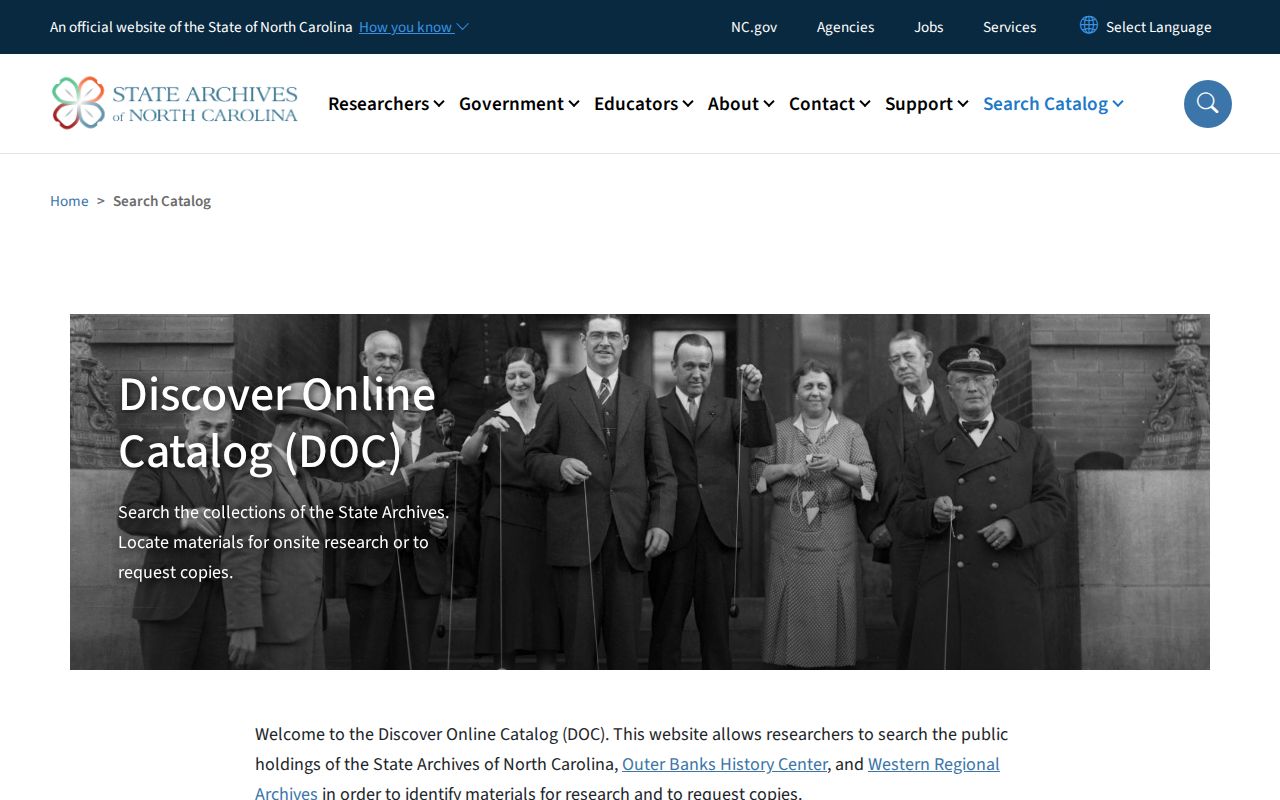
Use the catalog description with the library's microfilm, maps, and county books to document an old address trail one item at a time.
Shelby Address Labels Over Time
Label every address before drawing a conclusion. A situs address identifies the physical parcel. A tax mailing address identifies where notices were sent and can be a business, post-office box, or another residence. A historic directory or filing address captures a person, business, agent, or past moment. A fourth check is geography: city limits, the extraterritorial jurisdiction, and a postal ZIP are separate layers. Shelby's county-seat records concentration is convenient, but the city, county, library, and archives remain separate custodians.
For a current street-by-street parcel workflow, use the Shelby Street Directory. For past residents, preserve the original address wording alongside the source date and legal description. That discipline makes it easier to recognize a renumbered street, a subdivided parcel, or an address that was never a residence in the first place.